Day 1:Tiny Pollutant, Big Impact
Join leading scientists and environmental experts as they share the latest research on microplastics, their widespread impact on ecosystems, human health, and coastal communities.
Day 1 will feature in-depth presentations and discussions exploring how microplastics move through our environment—from oceans and rivers to the food we eat—and what current studies are revealing about their long-term effects.
PLUS, enjoy a special screening of the award-winning documentary Plastic People, an eye-opening film that sheds light on how plastic pollution has infiltrated nearly every corner of our world and what we can do about it.
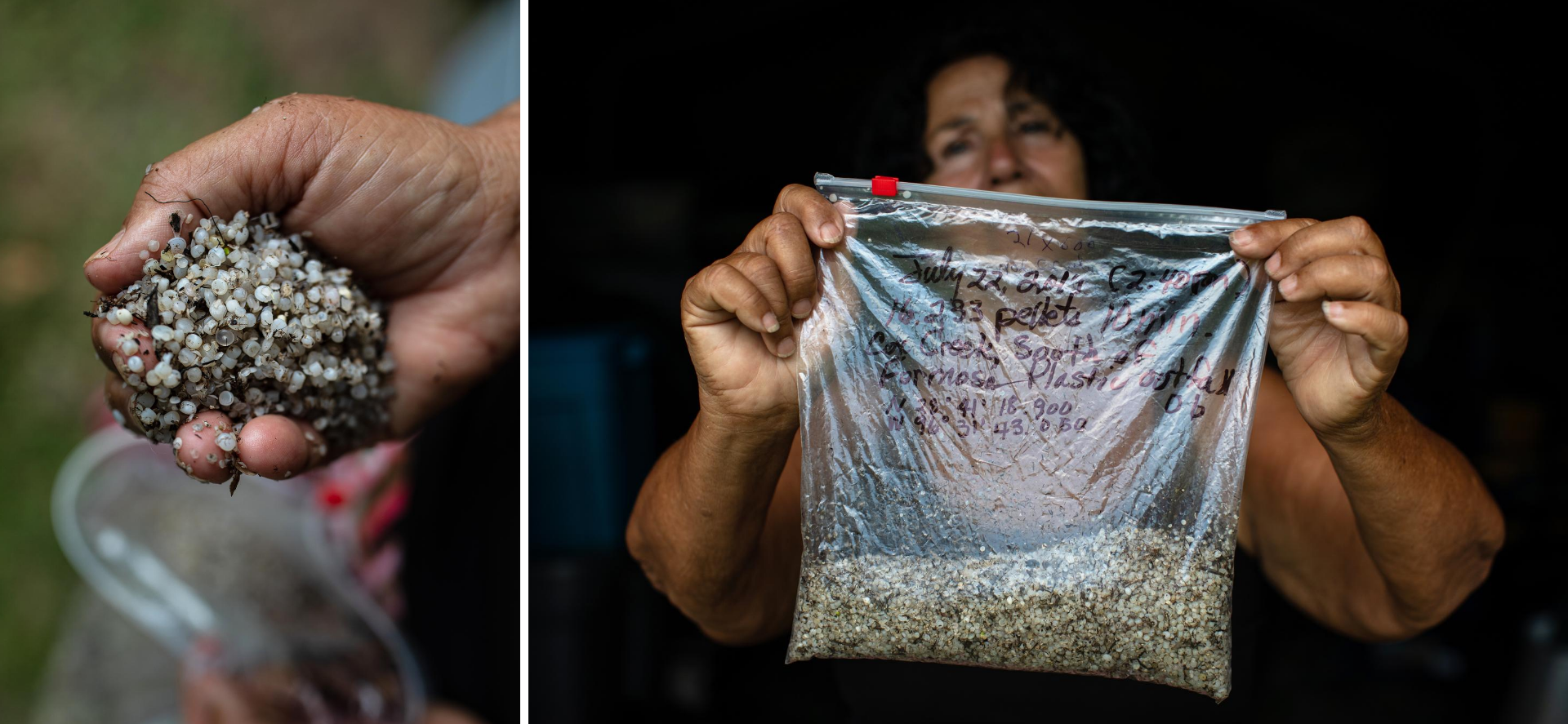
Diane Wilson, the San Antonio Bay Estuarine Waterkeeper, holds nurdles – small, white bb-sized pellets – that she collected near the Formosa Plastics plant. Her relentless dedication to collecting the nurdles was crucial to her historic court victory against Formosa.that she collected near the Formosa plastics plant. her relentless dedication to collecting the nurdles was crucial to her historic court victory against Formosa. Photos by Tamir Kalifa. Source
Event Schedule
Registration
Sign-in table at the front. Light refreshments
8:30 AM
Welcome message from San Antonio Bay Area Waterkeeper & Blessing by Indigenous People of Coastal Bend & SBEW
9:00 AM
"Are we becoming plastic people?" with Dr. Phoebe Stapleton, Rutgers
Recently our laboratory asked the question: how does exposure to plastic particles effect maternal, fetal, and offspring health? This presentation will review the findings of our recent laboratory studies. We will discuss how we are approaching these studies, what the studies revealed, and what these results may mean for human health.
9:10 AM
Microplastic in Matagorda Bay presentation by Dr. David Hala, Texas A&M
Dr. Hala will present recent data on the levels of nano- and microplastics (or NMPs) in shellfish and fish from Matagorda Bay. The results presented were recently published (https://doi.org/10.1016/j.marpolbul.2025.118495). And some new data on the mixtures toxicity of microplastics and persistent pollutants on embryo-larval zebrafish will also be presented.
10:10 AM
A One Health Response to Microplastic Pollution by Dr. Sandra Metoyer, University of Houston-Clear Lake
Microplastics are recognized as a ubiquitous pollutant, infiltrating every corner of the planet—from the deepest oceans to the human bloodstream. We will discuss the far-reaching impacts of microplastics on ecosystems, animal health, and human well-being through the transdisciplinary framework of One Health. By connecting environmental contamination from plastics to health outcomes, we will examine emerging evidence on pathways, biological effects, and societal costs. Beyond assessment of impacts on human health, we will bridge science to informed action in order to affect positive change. Together, we can transform the science of human–environment interactions and One Health into collaborative action for a healthier planet and healthier people.
11:10 AM
12:15 PM
Lunch
Zero Discharge Panel with Amy Johnson, Matthew Donohue (NELC), Aiza F José-Sanchez (AIZACO)
San Antonio Bay Estuarine Waterkeeper v. Formosa Plastics, Texas with Amy Johnson
The talk describes the trial, settlement and implementation of the lawsuit brought by Diane Wilson and Waterkeeper, challenging the discharge of microplastics from the Formosa Plastics facility in Point Comfort, Texas. At trial, Waterkeeper used citizen science to lead the federal judge to conclude Formosa Plastics was a “serial offender” of the law. In 2019, the parties settled for the largest mitigation penalties in a private suit under the Clean Water Act, and a commitment to zero discharge of plastics; the implementation of the settlement continues.
12:45 PM
1:45 PM
Panel Q&A
2:30 PM
"Plastic People" Private Screening
Closing message from San Antonio Bay Area Waterkeeper
4:00 PM
Event Speakers
-
Phoebe Stapleton is a faculty member and researcher in the Pharmacology and Toxicology at Rutgers University. Her passion is understanding how exposure(s) to environmental toxicants during pregnancy can impact the health of the mother, developing fetus, and surviving offspring. Her primary focus is how exposure to air pollution during pregnancy can result in fetal growth restriction. Recently, she has focused on maternal exposures to micro- and nanoplastics particles. Her published finding include the identification of plastic particles in fetal and offspring tissues after maternal inhalation and quantification of nanoplastics in bottled water. Her work in this field has garnered significant attention and has been featured in multiple popular press outlets. She is originally from the Adirondacks of New York State and completed her graduate studies at West Virginia University.

-
Dr. David Hala is an Associate Professor in Marine Biology at Texas A&M University at Galveston. The focus of his research is to study the fate and impacts of legacy and emerging pollutants on aquatic organisms. On hearing an inspirational lecture on aquatic pollution while he was an undergraduate student in Marine Biology (at Bangor University, U.K.), he further pursued a master’s in research and doctoral degree in Aquatic Toxicology. His postdoctoral research was in environmental toxicology at the University of North Texas. Following which he worked for a year in the private sector as a Senior Biologist in Aquatic Toxicology. The gravitational pull of Texas pulled him back to his current position in 2015, where he has been since. He enjoys spending time with his family, which includes his wife and 6 year old daughter, and two standard poodles.


-
Sandra Metoyer leads the Environmental Institute of Houston at the University of Houston-Clear Lake with a passion for inspiring others to explore science, research, and education. With a background in geography and geosciences, she brings over a decade of experience developing innovative collaborations and projects that open doors to STEM careers, opportunities, and research. Sandra is especially passionate about turning research into informed action through collaborative, transdisciplinary partnerships that address today’s complex socio-environmental challenges.
-
Amy Johnson practices environmental law in Texas. For over 25 years, she consulted for Texas RioGrande Legal Aid on environmental cases, representing low-income Texans. She was lead counsel in San Antonio Bay Estuarine Waterkeeper v. Formosa Plastics, Texas, which challenged the discharge of microplastics. After the federal judge found Formosa a “serial offender” of the law, the parties settled in 2019 for the largest mitigation penalties in a private suit under the Clean Water Act, and a commitment to zero discharge of plastics. The implementation of the settlement continues. She worked on class action consumer cases in Oregon and taught business law and ethics for Suffolk University in Dakar, Senegal. She served as the first Texas Public Insurance Counsel. She also helped draft state laws regulating Texas colonias. She graduated cum laude from Harvard Law School in 1985. She is originally from Commerce, Texas and is a UT Austin alum.
-
As a Senior Attorney, Matt participates in all aspects of NELC’s federal court litigation. He investigates facilities suspected of violating environmental statutes, working closely with community members to compile evidence of violations and harm. He also ensures NELC presents compelling evidence of liability by securing compliance with discovery requests, deposing fact and expert witnesses, and fighting for public access to important documents. Recent successes include Clean Air Act litigation against U.S. Steel following a catastrophic explosion at an aging coking facility outside Pittsburgh, Clean Water Act litigation against a plastic facility operated by the largest expandable polystyrene manufacturer in North America, and the preservation of a record-setting $14.25m civil penalty imposed on ExxonMobil for violations of the Clean Air Act at a sprawling petrochemical manufacturing facility in Baytown, Texas.
In addition to his litigation responsibilities, Matt frequently supervises law students that participate in NELC’s internship program.
Prior to joining NELC, Matt spent six years at a plaintiff-side litigation firm. There, he represented individuals suffering from illnesses caused by toxic substance exposure, prosecuting complex lawsuits against many of the nation’s largest corporations. He is a graduate of Skidmore College and Boston College Law School. During law school, he advocated for progressive constitutional principles as president of the Boston College chapter of the American Constitution Society and provided free legal services to low-income families through the school’s nonprofit legal clinic.
More speakers and updates to come!
Register to save your seat and stay in the know.
-
24 years of engineering experience focused on water resources (quantity and quality) projects, natural resources projects, and environmental approval and compliance for public and private civil engineering projects. Her expertise extends through a variety of civil projects (water, wastewater, transportation, land development, and energy) during their different project stages (planning, design, construction, and operation and maintenance).
Plastic People is one of those essential state-of-our-world documentaries.
– OWEN GLEIBERMAN
Variety
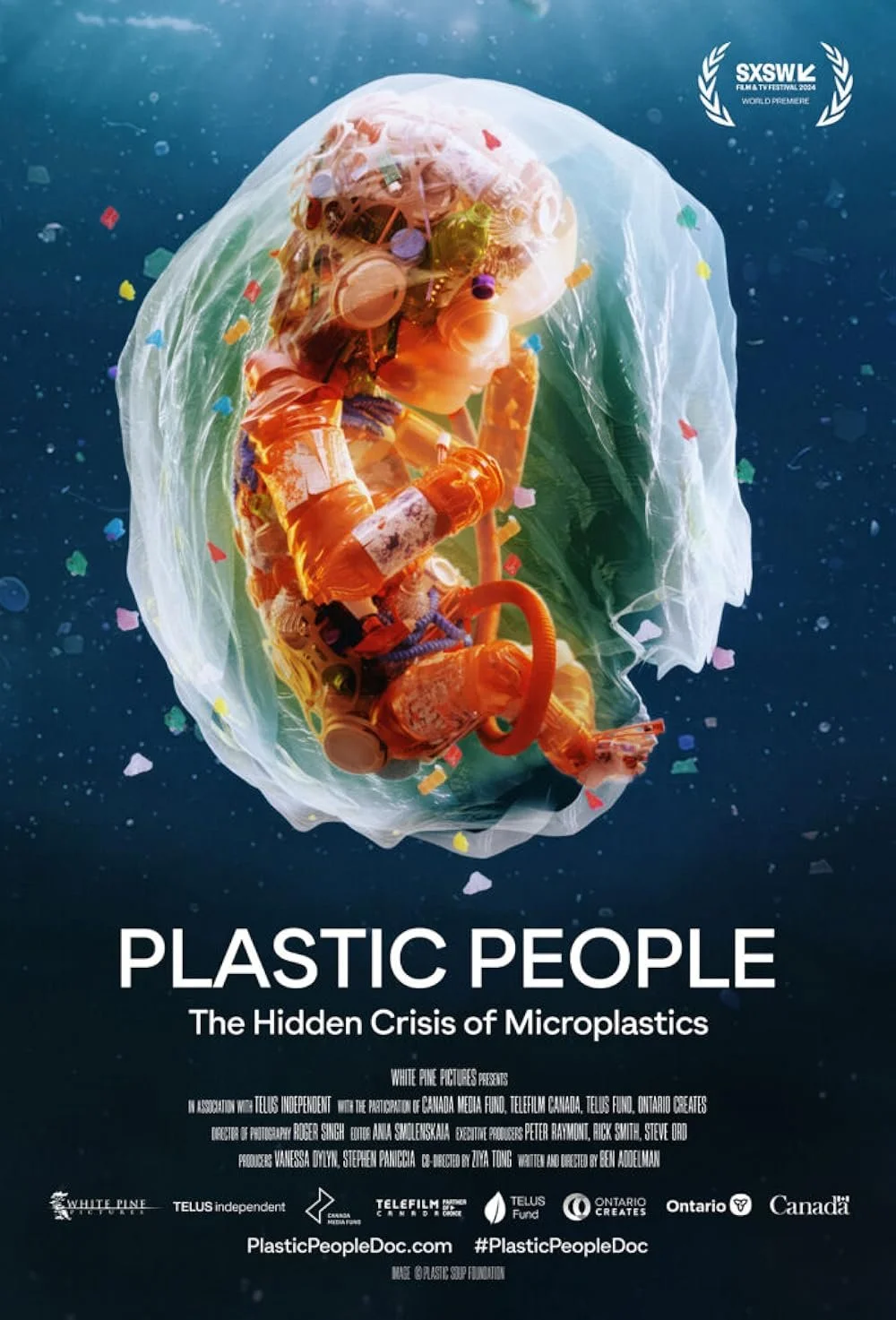
The award-winning feature documentary Plastic People investigates our addiction to plastic and the growing threat of microplastics on human health. Almost every bit of plastic ever made breaks down into “microplastics.” These microscopic particles drift in the air, float in all bodies of water, and mix into the soil, becoming a permanent part of the environment.
Now, leading scientists are finding these particles in our bodies: organs, blood, brain tissue, and even the placentas of new mothers. What is the impact of these invisible invaders on our health? And can anything be done about it?
Acclaimed author and science journalist Ziya Tong takes a personal approach by visiting leading scientists around the world and undergoing experiments in her home, on her food, and her body while collaborating with award-winning director Ben Addelman (Discordia, Bombay Calling, Nollywood Babylon, Kivalina v. Exxon) in an urgent call to action for all of us to rethink our relationship with plastic.